

Most women can be a gestational surrogate two to four times. The guideline U.S. fertility clinics follow caps a carrier at five total deliveries and three cesarean deliveries across her lifetime, and those counts include your own children. Subtract the births you’ve already had from each number; the smaller result is your ceiling. No federal or state law sets a figure. The limit comes from the American Society for Reproductive Medicine (ASRM) and from your own delivery history.
ASRM Guidelines Set the Medical Limits
ASRM recommends that a carrier be 21 to 45 years old, have at least one prior uncomplicated full-term pregnancy and have no more than five previous deliveries, with no more than three of them by cesarean. Fertility clinics use this document when they screen carriers, which is why agencies nationwide quote the same numbers.
A surrogate pregnancy and a personal pregnancy count the same. The cesarean limit is the tighter one for many women, because each C-section adds scar tissue to the uterus and raises the risk of placental complications in later pregnancies. A woman whose two prior births were both cesareans has one delivery left under the guideline, even though her total count would allow three.
Count Your Own Surrogacy Ceiling
You can work out your number in under a minute.
- Count every delivery you’ve had, personal and surrogate, and subtract that from five.
- Count every cesarean delivery and subtract that from three.
- The smaller of the two results is the number of surrogate journeys the guideline allows you.
A mother of two vaginal births gets three. A mother of two cesarean births gets one. If either result is zero, the guideline would rule you out, though a clinic can still evaluate you individually.
Limits That Apply Regardless of Your Count
The numbers above are a guideline, not a law, and the fertility clinic’s physician makes the final call. Several things can lower your ceiling or close it entirely:
- A complication in any earlier pregnancy, such as preeclampsia, preterm birth or a postpartum hemorrhage, can disqualify a candidate even with a low delivery count.
- Age can close the window before the count does, since the ASRM range ends at 45.
- Some clinics apply stricter caps of their own, and your new intended parents’ clinic may screen differently from the one you used last time.
Nothing on this page replaces that screening. The clinic’s screening is where the real answer comes from, and if you’ve carried before, you already know that process well. Use the math here to set expectations, then let the medical team confirm what’s possible for you.
Repeat Surrogate Compensation at ABC Surrogacy
Experienced gestational surrogates earn $10,000 to $15,000 or more above our first-time base. Our base for a first journey is $60,000 to $70,000 depending on location, so a repeat surrogate’s package often reaches $85,000 or more once allowances are included. Intended parents cover every surrogacy-related cost, so none of that figure goes to medical, legal or travel expenses.
The full breakdown is on our surrogate compensation page.
Intended parents pay more for experience because a completed journey removes guesswork. Your records show you carried a healthy pregnancy, followed the medication protocol and handled delivery and the handoff. That history also shortens the early stages, since most of your screening is already on file.
Brittany's Second Journey Ended in a C-Section
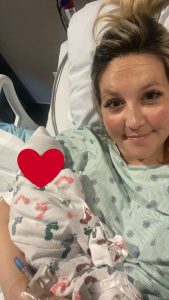 Brittany is a two-time surrogate with ABC, and her second journey shows the cesarean limit in practice. She delivered a baby girl by C-section at 37 weeks and 4 days; the baby weighed 7 pounds 9 ounces. The hospital made an exception to its one-visitor rule and let both intended parents into the operating room, and the mother held Brittany’s hand through the surgery. That delivery now counts toward Brittany’s cesarean total, which is the kind of detail a repeat surrogate tracks between journeys.
“In spite of the challenges I faced, this was one of the most rewarding things I have ever done.” Brittany, two-time surrogate
Her two journeys paid for different things. After the first, she paid off debts and replaced her sedan with an SUV that fit her growing kids. After the second, her family took a vacation and put the rest toward a down payment on a future home. She tells the full story, including the match that fell through before her first journey, in Brittany’s birth story.
Hannah Carried Twice for the Same Family

Hannah’s second journey is with the same intended parents as her first, a same-sex couple who wanted a sibling for their son. She and her wife conceived their own daughter through IUI in 2021, and she chose that couple partly because of it. Between the two journeys, Hannah and the parents stayed in touch through calls, messages and photos. She says she doesn’t think she could have carried for anyone else. Her surrogate spotlight has the full interview.
Hannah’s compensation let her stay more present with her daughter without financial stress. She’s setting part of it aside for her daughter and part toward expanding her own family once this journey is done.
Waiting Time Between Surrogate Journeys
Most clinics want a full recovery before another embryo transfer, and six months postpartum is the usual point to restart the process. Your OB and the fertility clinic set the actual date based on how you delivered; a cesarean usually means a longer wait than a vaginal birth. ABC keeps your records on file, so the time between journeys goes mostly to matching and the legal agreement rather than re-screening from scratch.
Next Steps for Experienced Surrogates
If your count leaves room for another journey, you can apply as a returning surrogate. Our requirements page lists the current eligibility criteria. Returning surrogates who carried with another agency are welcome; bring your prior medical records and we’ll start from there.